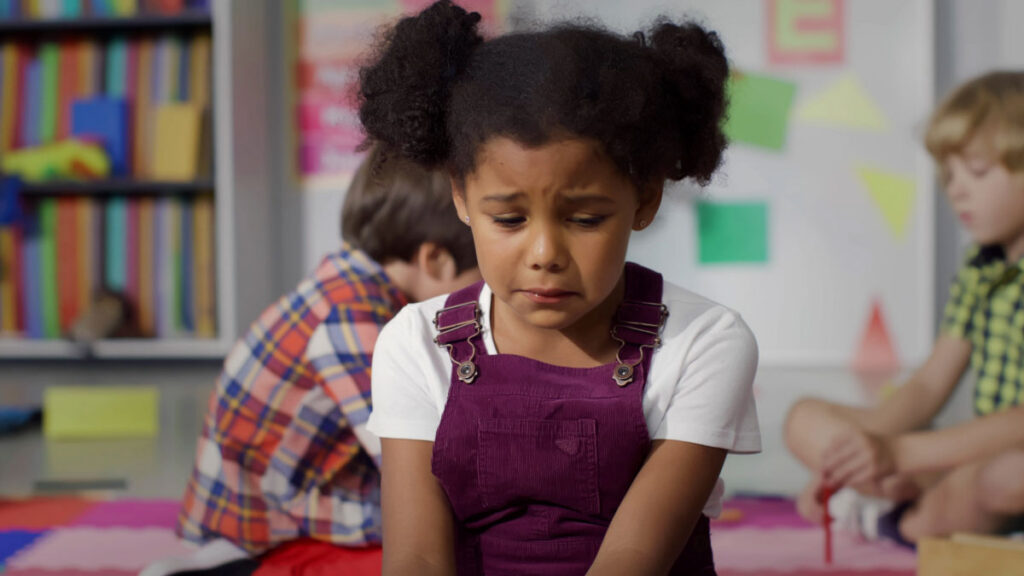
If you have ever had a student shut down, explode, hide under a desk, or burst into tears over what seems like a small problem, you already know why a calm down corner matters.

Big feelings are part of childhood.
The goal is not to eliminate them. The goal is to teach students what to do when those big feelings show up.
A calm down corner in the classroom gives students a safe, structured place to regulate so they can return to feeling more in control. When done well, it becomes a proactive classroom behavior management tool rather than a reactive consequence.
Through years of working in special education classrooms and now creating social emotional learning curriculum, we have seen what makes calm down corners effective and what turns them into avoidance spaces. If you are wondering how to create a calm down corner that actually works, here is what to focus on.
WHAT IS A CALM DOWN CORNER?
Let’s first discuss what a calm down corner is. A calm down corner is a designated space in the classroom where students can practice self regulation strategies when they feel overwhelmed, frustrated, angry, or overstimulated.
What a calm down corner is not: It is not a time out area. It is not a punishment. It is not a play center.
A calm down corner is a structured space designed to support emotional regulation strategies and help students reset so they can rejoin instruction successfully. When students understand the purpose, the calm down corner becomes empowering instead of enabling.
STEP 1: START WITH THE PURPOSE, NOT THE DECOR
Before adding a cute rug, pillows, or sensory tools, define the purpose of your calm down corner.
A calm down corner classroom space should be:
- A place to regulate
- A place to reset
- A place to practice coping strategies
When teachers clearly communicate that the goal is regulation and not escape, students are more likely to use the space appropriately. This clarity is foundational for effective classroom behavior management.

STEP 2: TEACH SELF REGULATION STRATEGIES FIRST
One of the biggest mistakes teachers make when creating a calm down corner is expecting students to use it independently without explicit instruction.
Students cannot calm down if they do not know:
- What they are feeling
- How big the problem is
- What strategy matches the moment
- When it is appropriate to take a break
Many students struggle not because they feel upset, but because they cannot tell whether their feelings are big or small. Teaching students to recognize emotional intensity helps them choose calm down strategies that actually match the situation instead of escalating further.
If you want your calm down corner to work, self regulation skills must be explicitly taught through:
- A feelings chart
- A size of the problem visual
- Breathing strategy visuals
- A small visual timer
- One or two simple sensory tools
These skills are often taught explicitly through lessons that help students identify emotions, compare big versus small feelings, and practice matching strategies to real situations.
These social emotional learning skills should be taught during calm moments, practiced through modeling and role play, and reinforced consistently. The calm down corner supports the skills. It does not replace them.

STEP 3: KEEP THE CALM DOWN CORNER SIMPLE
When thinking about how to set up a calm down corner in your classroom, more is not better. An overstimulating space defeats the purpose.
Helpful materials may include:
- A feelings chart
- A size of the problem visual
- Breathing strategy visuals
- A small visual timer
- One or two simple sensory tools
Visual supports such as calming strategy posters or flipbooks help students remember what to do when emotions feel overwhelming. Instead of guessing, students can rely on familiar strategies they have already practiced during instruction.
Everything in the calm down corner should support self regulation strategies for students, not entertainment.
Clear visual steps can also help:
- Sit
- Choose a strategy
- Reset
- Return
Structure reduces confusion and power struggles.
STEP 4: ADD STRUCTURE AND TIME LIMITS
A calm down corner classroom setup should include structure. Without structure, the space can quickly become avoidance.
Consider:
- A three to five minute visual timer
- Clear expectations for when to return
- Defined behaviors that show readiness
Understanding the size of the problem helps students decide whether a calm down corner is needed or if a quick coping strategy will work.
Students benefit from knowing what “ready to return” looks like:
- Calm body
- Safe hands
- Quiet voice
- Following directions
The goal is not perfect behavior. The goal is emotional regulation and readiness to learn.
STEP 5: TEACH STUDENTS HOW TO ASK FOR A BREAK
One of the most powerful outcomes of a calm down corner is this simple sentence: “I need a break.” Teaching students to appropriately request a break is a key part of self advocacy and long term independence.
Students should practice:
- Asking at appropriate times
- Deciding if they truly need a break
- Using strategies before escalation
Explicit practice around when it is appropriate to ask for a break helps students learn to handle big feelings safely.
When students begin using the calm down corner proactively instead of only during a meltdown, you know the system is working.
MAKE THE CALM DOWN CORNER PART OF YOUR CLASSROOM CULTURE
A calm down corner works best when it is normalized for the whole class. When emotional regulation is part of a social emotional learning classroom framework, students understand that everyone has feelings and everyone can use strategies. This reduces shame and builds ownership.
Helping students create a personal calm down plan can strengthen this culture by giving them ownership over which strategies work best for them and when to use them.
WHAT ACTUALLY MAKES A CALM DOWN CORNER EFFECTIVE
It is not the bean bag.
It is not the aesthetic.
It is not the number of fidgets.
It is the instruction behind it.
An effective calm down corner is built on:
- Emotional awareness
- Problem size understanding
- Coping strategies
- Self advocacy
When those skills are explicitly taught, the calm down corner becomes a powerful support for classroom behavior management and student independence. Without that instruction, it becomes just another corner.
A FINAL THOUGHT
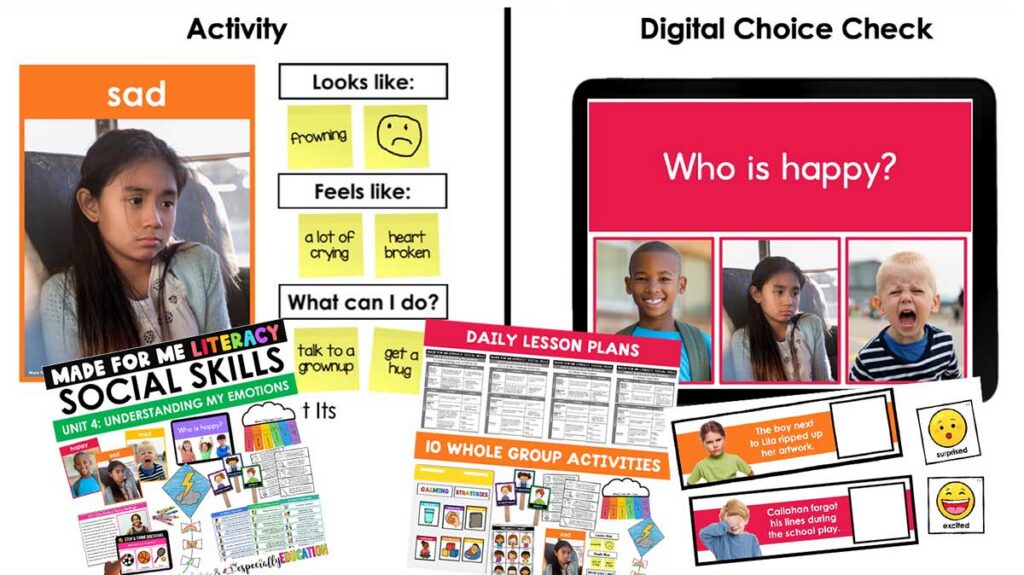
If you are building a calm down corner and realizing your students need more explicit instruction around feelings, problem size, coping tools, and asking for a break, that is exactly why we created the Made For Me Literacy Social Skills Units.
The Made For Me Literacy Social Skills Bundle includes structured lessons, visuals, and practice activities that explicitly teach identifying big versus small feelings, understanding the size of a problem, using calming strategies, safely handling big emotions, asking for a break, and creating a calm down plan.
You can explore the Social Skills Bundle here.


Leave a Reply