
Choose a fall activity that lets your student practice a familiar skill. Show them where to get the materials, how to start, and where to put finished work, giving extra support with any unfamiliar steps.
Fall matching activities can give students practice with a skill they already know. If you organize the activity in a task box, a small container holding the materials, show students how to open it and get the pieces ready.
Decide What You Want the Student to Practice
Think about two students using the same picture-matching activity. One is still learning to find the matching picture. The other can match but waits for an adult to open the box and set everything out.
The first student needs help learning the matching skill. For the second, you might focus on opening the box and getting started. The materials can be the same while the lesson is different.
Before choosing an activity from Fall Basic Skills Task Boxes, decide which part you want to work on. If matching is familiar, watch what happens before the first match. Does the student know what to do with the box? Can they reach and handle the pieces?
A completed activity will not answer those questions by itself. Notice where your help was needed.
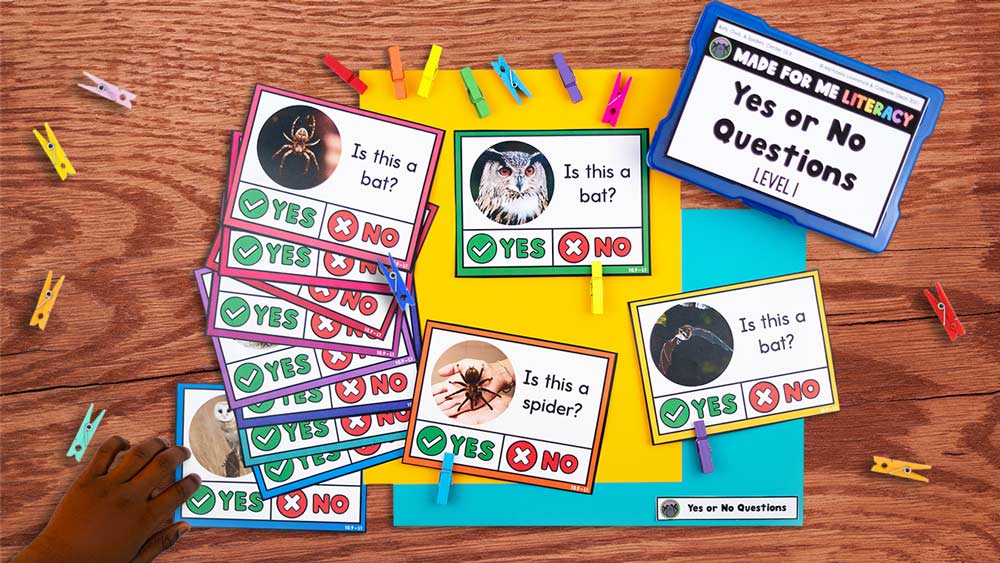
Make the Starting Point Easy to Find
Open a task box as a student would. Are the pieces ready to use, or does the student have to sort through a pile before beginning?
If organizing the materials is not part of today’s lesson, do that preparation yourself. A shallow tray can keep loose pieces together without covering the work area.
Start with one activity and a finished basket. Show the student how to get the activity, complete it, and move it to the basket. Include how to ask for help and what to do afterward.
Then give the student time to begin. It is easy to offer another reminder before they have had a chance to act. If they need help, give it at the step where they are stuck.
Our article on implementing an independent work station has more guidance on arranging the space and teaching the routine.
Use Errorless Work to Practice the Routine
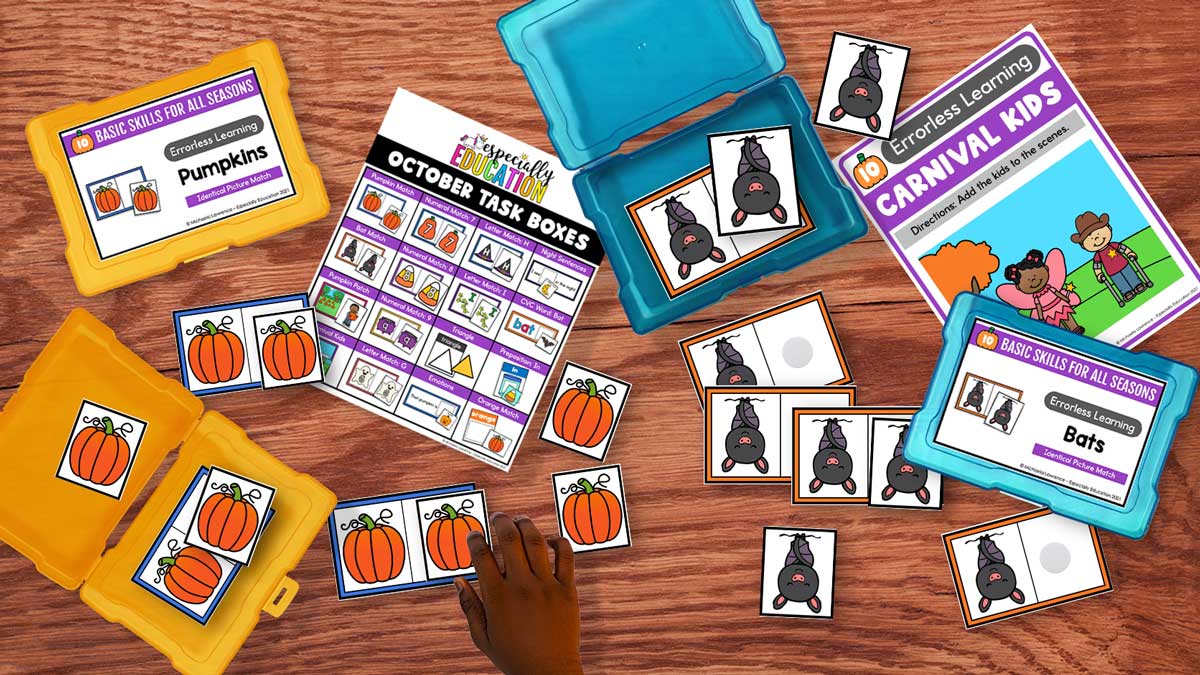
An errorless activity removes the need to choose between a correct and an incorrect answer. That can be useful when you want to focus on handling materials or finishing a task.
For example, you could prepare a put-in activity with a container and several large pieces. Show the student how to put the pieces inside and move the container to the finished area.
You can watch whether they begin putting pieces in or move the container when it is empty. Those observations tell you about the work routine. You would need a different activity to find out whether the student can match or sort.
When using the October or November Errorless Learning Task Boxes, model the selected activity before asking a student to use it on their own. An errorless task can still have unfamiliar steps.
For more examples, see ways to use errorless activities in the primary classroom.
Separate Cutting From the Skill on the Page
A student may know where a picture belongs but struggle to cut it out. With Fall Cut and Paste, decide whether today’s focus is cutting or placing the pictures.
If you want to see where the student places each picture, cut the pieces ahead of time. You can also leave the glue aside at first so the student can move a picture without having to peel it off the page.
Fewer pieces may make the activity easier to manage. Try covering part of the page and offering just the pieces needed for the visible section.
When cutting is the goal, provide the tools and support the student needs for that part. Note the help with scissors separately from help deciding where a picture belongs. Keep their usual communication supports within reach, too.
Carry Familiar Steps Into November
When you change the materials, leave the finished basket and familiar visual cues in place. Show any new steps rather than assuming the student will recognize them.
If a student pauses, look closely at what they are trying to do. They may need help opening a different container, even though they know how to complete the activity inside.
Our article on why predictable routines are essential for special education discusses using familiar steps and visuals throughout the day.
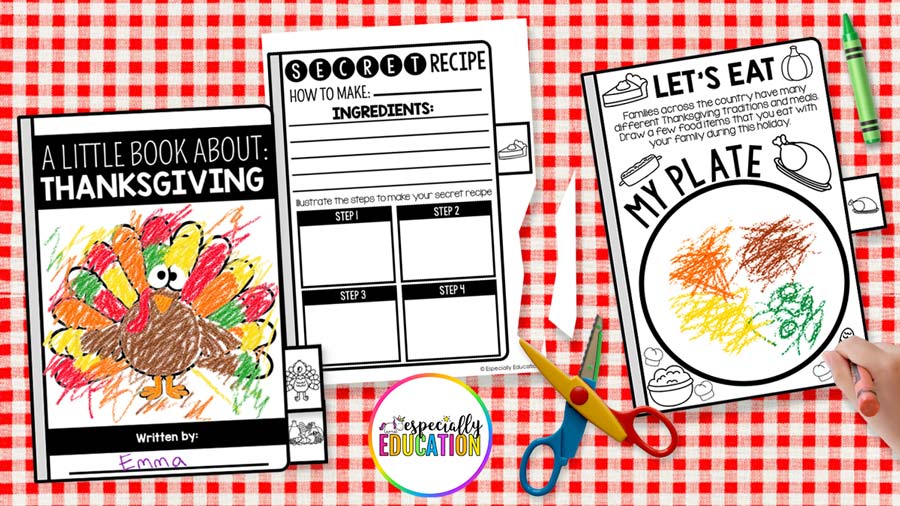
The free Thanksgiving Activity Flip Book above is another option for November lessons. Choose a page to work through together, then decide whether any part is familiar enough for the student to practice on their own.
Choose Tomorrow’s Starting Point
After the activity, leave yourself a short note about one step. “Moved work to the basket after one gesture” is more useful for planning tomorrow than “finished task box.”
You may need to adjust the materials, demonstrate a step again, or allow more time before helping. Let what you noticed guide that choice.
A turkey bulletin board can give students a place to revisit pictures and words from a group lesson. If you use related vocabulary cards or labeling activities during independent work, introduce them together first so students know what the pictures and labels mean.
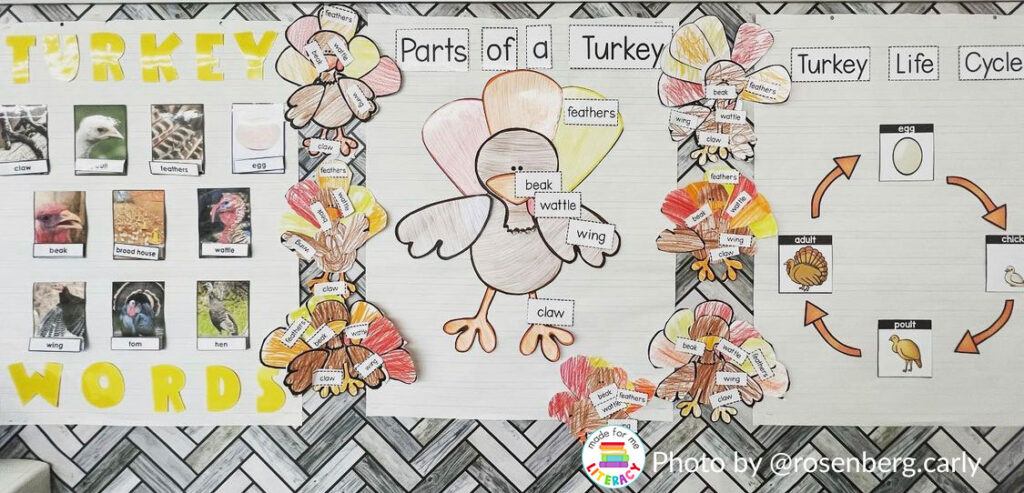
See fall task box and Made For Me Literacy units or get the free Thanksgiving Activity Flip Book to choose an activity for your next lesson.
Leave a Reply