
The start of the school year can feel like you’re making it up as you go along, especially in a self-contained special education classroom.
You’re handed a room, a caseload, and a curriculum that often needs adapting on the fly. Before academic instruction begins, you’re juggling assessments, and routines while working to create connections with your new students.
Start Strong: Why the First Two Weeks Matter in Special Education
Planning the first two weeks with intention can help ease that pressure and build a foundation for a successful year.
Whether you’re brand new or a seasoned teacher looking for structure, here are five essential areas to focus on in your first two weeks.
Create a Calm, Organized Environment
Organization sets the tone. A visually clear, clutter-free space helps students feel safe and confident. Use labels, color-coded bins, and consistent locations for materials to reduce confusion and support independence.

A Great Solution for Materials Overwhelm
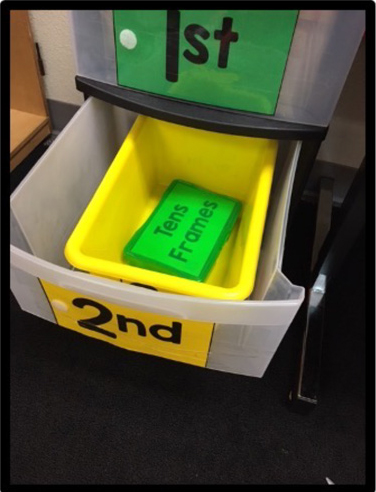
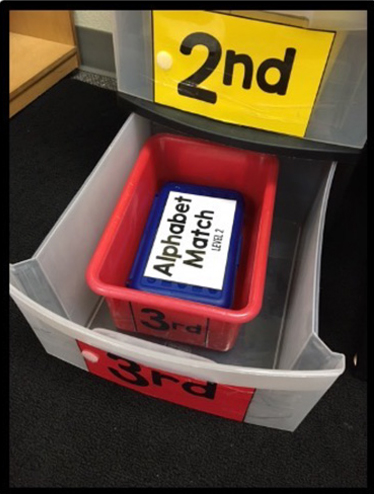
When I started using a 3- drawer bin to organize our independent workstation, I LOVED it!
My students could see how many activities they’d completed and how many they had left. Ideally, each student would have their own bin, but due to limited space, that is sometimes unrealistic.
Each drawer has one activity. When your students finish the activity, they put it in a finished box (not pictured). When all 3 activities are completed, the student cleans up.

Get to Know Your District Assessment Requirements
Before diving into lesson planning, check your district’s required assessments. Make a calendar to avoid last-minute surprises.
Starting early helps you gather meaningful data without sacrificing instructional time. You can also explore tips for efficient data collection in special education to streamline your systems.

Prioritize IEP Goals from the Start
Start collecting data on IEP goals immediately.
Try keeping individualized data sheets on a clipboard or in “data bags”, a simple setup with zip-top bags filled with the tools each student needs (like flashcards, adapted books, or manipulatives).
If you’re new to progress monitoring, these Daily Parent Communication Logs can help track both academic and behavioral data throughout the day.
Practice Schedules and Routines Daily
Consistency is essential for students with communication differences or sensory needs. Practice arrival routines, station transitions, and unexpected changes. Use visual schedules and model behaviors frequently.
For a deeper dive, visit this post on visual schedules for autism and special education, which shows how tools like First-Then Boards or schedule flipbooks reduce anxiety and build independence.
Teach Expectations as Explicit Lessons
The social side of back-to-school is just as important as academics. Use direct instruction to teach classroom rules, behavior expectations, and peer interactions. Repetition and role-playing can help students generalize skills across settings.
Social narratives like those in our Social Skills Bundle introduce essential concepts with clarity, visuals, and age-appropriate language.
Have Faith. A Confident, Calm Start is Possible
You don’t need to have it all figured out. But investing time into structure, schedules, and systems now will save you stress later. The first two weeks are your chance to build routines that empower your students, and you, to thrive all year long.
Ready to Streamline Your First Two Weeks?
Explore the Back-to-School collection on TpT for classroom tools designed with structure, clarity, and student success in mind.
Leave a Reply