
Every Fall, Classrooms Fill With Apples.
Children paint apples, count apples, taste apples, and read books about apples. Apples are familiar enough for young children to recognize, but interesting enough to inspire questions and conversation.
That makes an apple theme a wonderful opportunity to build vocabulary.
But how much of that vocabulary do students actually remember after the apple activities are put away?
For many young learners, especially children with disabilities or language delays, words start to stick when children hear them, see them, use them, and connect them to real experiences.
The best apple vocabulary lesson may not look like a vocabulary lesson at all. It might happen while cutting open an apple, reading a book, making applesauce, comparing two apples, or deciding which apple tastes best.
The goal isn’t to teach a list of apple words. It’s to help children build language they understand and can actually use.
Start With Something Children Can Touch
Think about how a child might learn the word stem.
You can show a picture of an apple, point to the stem, say the word, and ask the child to repeat it. There is certainly a place for that kind of direct instruction.
But then give the child a real apple.
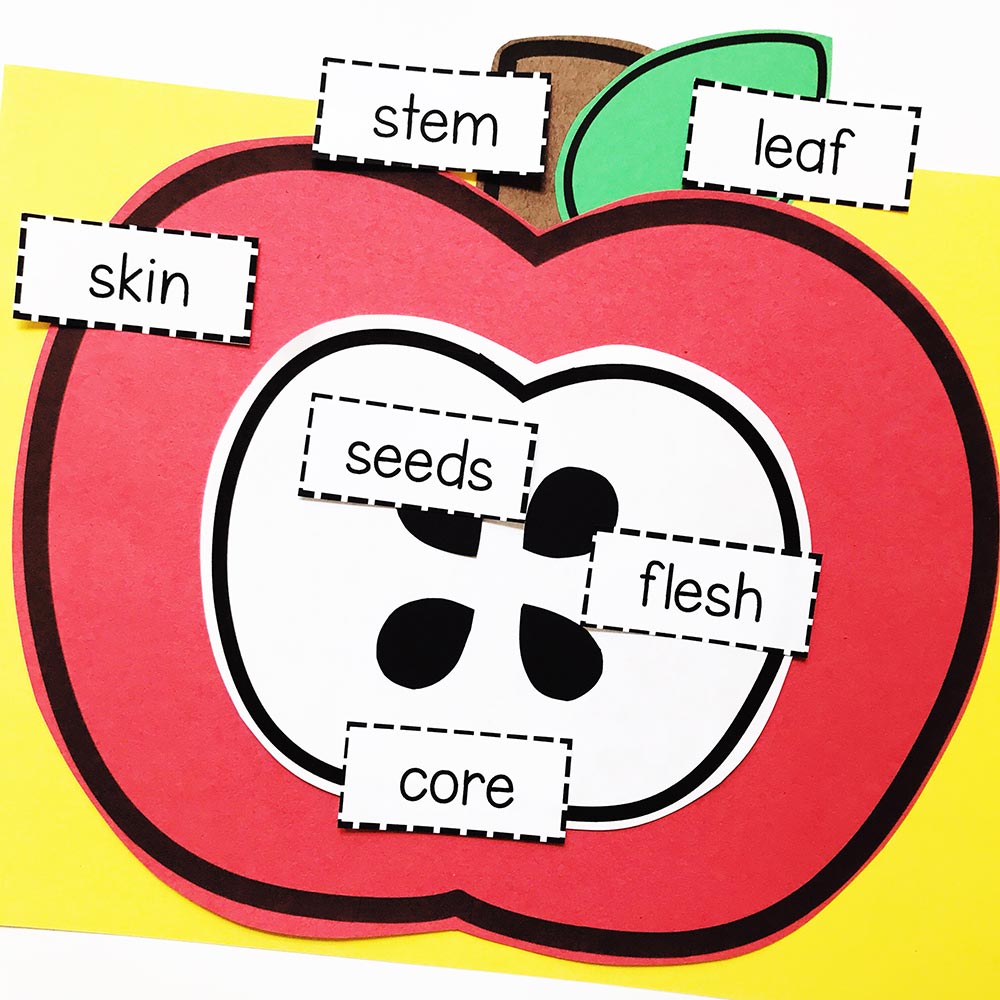
Find the stem. Touch it. Compare it with the stem on another apple. Look for one in a book. Talk about it again when you cut an apple open.
A few days later, you may see that child pick up an apple and point out the stem without being asked.
Now stem isn’t just an isolated word on a card. The child has experiences connected to it.
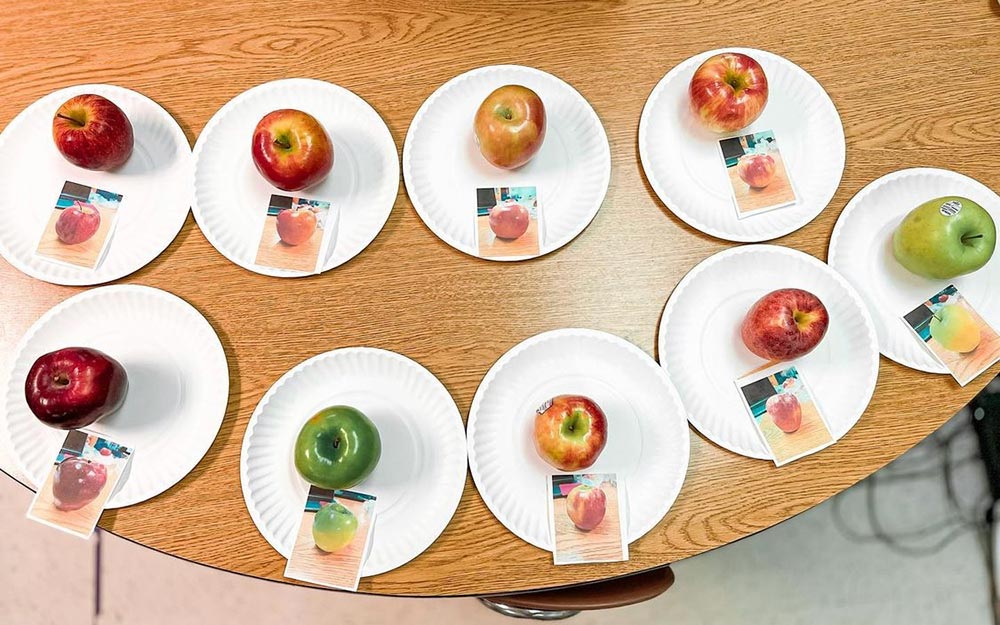
Before introducing a long vocabulary list, I like to give children something worth talking about. Put several apples on the table and let them investigate.
Are they the same? How do they feel? What colors do they see? What happens when you cut one open?
Those observations give you natural reasons to introduce words such as stem, skin, seeds, core, smooth, crisp, sweet, and sour.
Try It With Just Five Apple Words
You don’t need a huge vocabulary list to get started.
Choose five useful words: apple · stem · seed · smooth · sweet
Then give children different reasons to use those same words throughout the week.
Monday: Explore real apples. Find the stem and seeds.
Tuesday: Look for the words and concepts in an apple book.
Wednesday: Describe and compare apples. Which ones are smooth?
Thursday: Bring the words into a science activity, craft, or center.
Friday: Taste apples. Which ones are sweet? Graph students’ favorites and talk about what you discover.
The words stay familiar while the experience changes. And you haven’t had to create five separate vocabulary lessons.
Move Beyond Naming
Knowing that something is an apple is only the beginning.
“The apple is red.”
“It feels smooth.”
“It has a stem.”
“The seeds are inside.”
“This apple is bigger.”
One familiar object can help children practice describing, comparing, and building sentences.
Not every child needs to respond in the same way, either. Some children may use complete sentences. Others may point to a picture, choose between two answers, complete a sentence starter, use gestures, or communicate with a picture board or communication device.
Participation can look different from child to child. What matters is that each child has a way to show what they understand and something worth communicating about.
Revisit the Words Without Repeating the Lesson
Children often need to encounter a word many times before it becomes familiar. That doesn’t mean doing the same activity over and over.
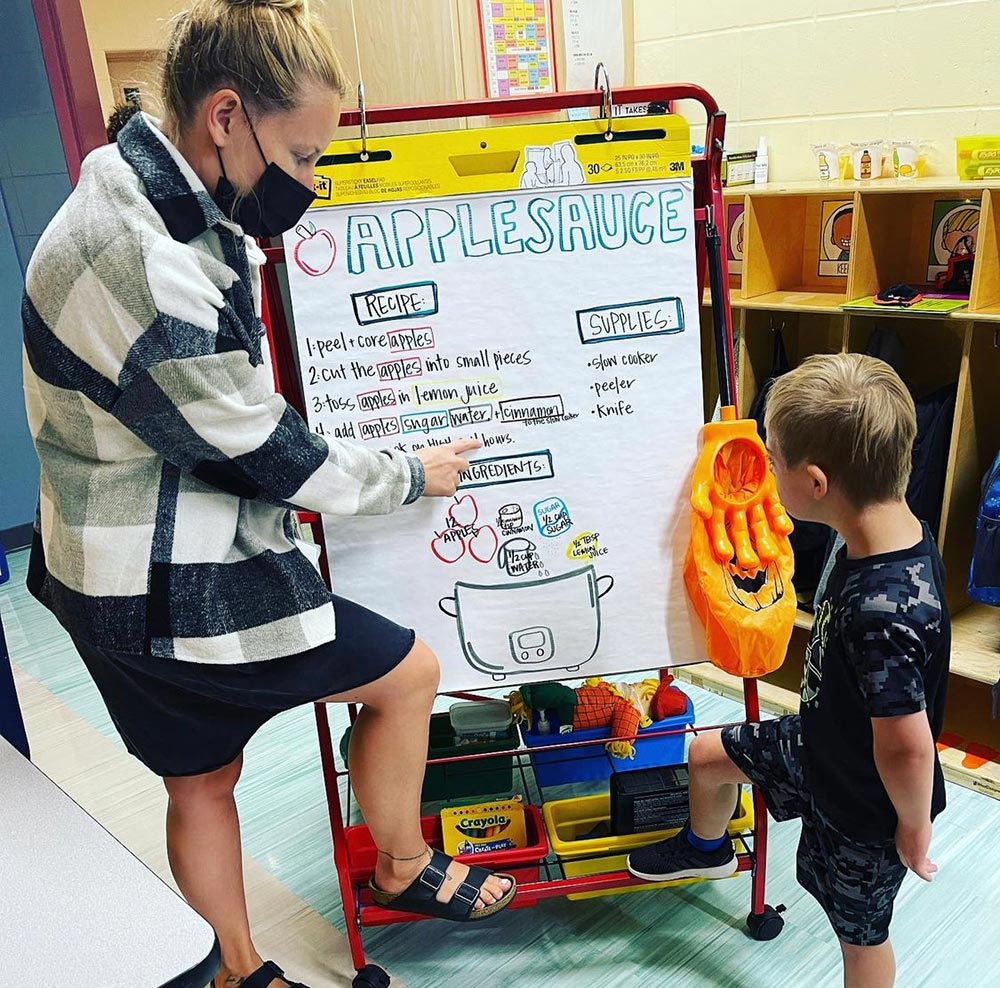
A child might first encounter apple vocabulary on an anchor chart and then hear the same words in a read-aloud. Later, those words come up while exploring the parts of an apple, completing a craft, or eating a snack.
Books can put the words into a story. Science gives them somewhere new to go. Cooking brings in words such as stir, smell, taste, soft, and crunchy. Math introduces more, less, same, different, bigger, and smaller.
These aren’t all words you would put on an “apple vocabulary” list.
They don’t need to be.
We’re using something familiar to help children build language they can use somewhere else.
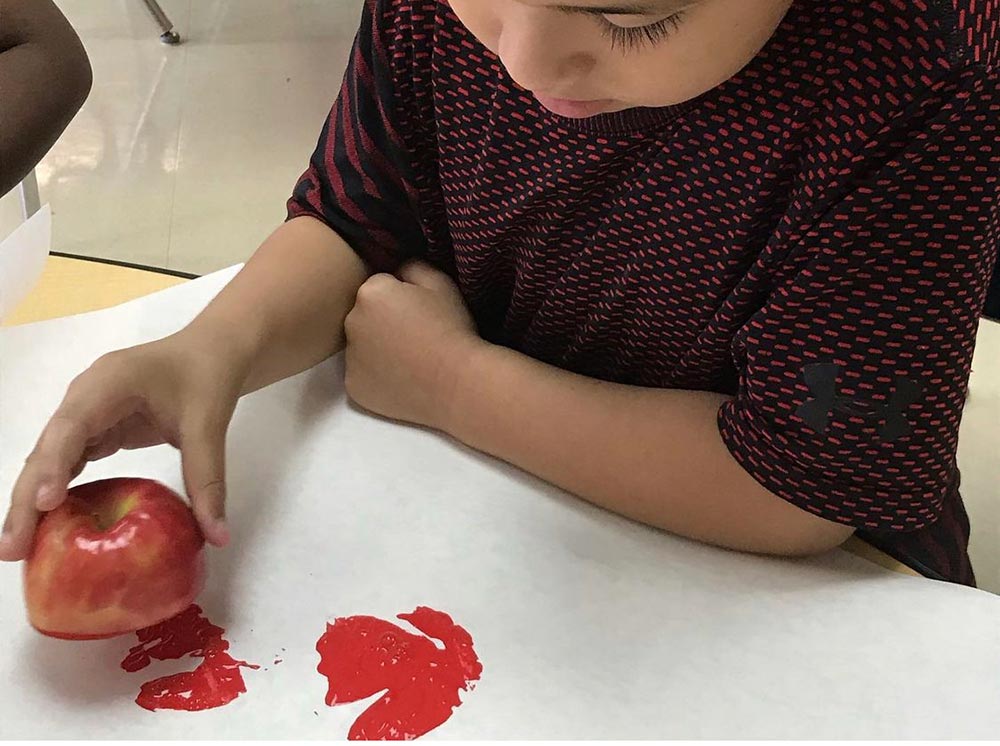
Give Children a Reason to Communicate
A simple apple taste test can produce a surprising amount of language.
Which apple do you like?
Was it sweet or sour?
Which apple should we add to the graph?
What did your friend choose?
A predictable class chart such as “I like ___ apples” gives students another reason to make a choice and share it.
There is a difference between answering a question because an adult is checking a skill and communicating because you actually have something to say. Whenever we can create the second kind of opportunity, I want to take it.
Look for Understanding in Different Places
Sometimes we assume a child doesn’t know a word because we haven’t heard them say it yet. But understanding often shows up somewhere else first.
A child points to the right picture. Hands you the right object. Follows the direction. Matches two related pictures.
Then three days later, you hear the word.
A student who rarely responds during a whole-group lesson may show you exactly what they know during a task box activity, a craft, or while creating snack.
Give children different opportunities to show what they understand, and watch for where the learning appears.
The Real Goal Is Bigger Than Apples
Eventually, the apple activities get put away. The language doesn’t have to disappear with them.
Words like smooth, round, inside, outside, bigger, smaller, same, different, grow, seed, and root belong in all kinds of experiences.
When pumpkins arrive, children can compare them. Cut open another fruit and they can look for seeds. Plant something and root and grow return.
And this is where having activities that connect across the month can be especially helpful. Instead of teaching apple vocabulary once and moving on, you can bring the same words and concepts into books, science, crafts, cooking, math, and independent practice.
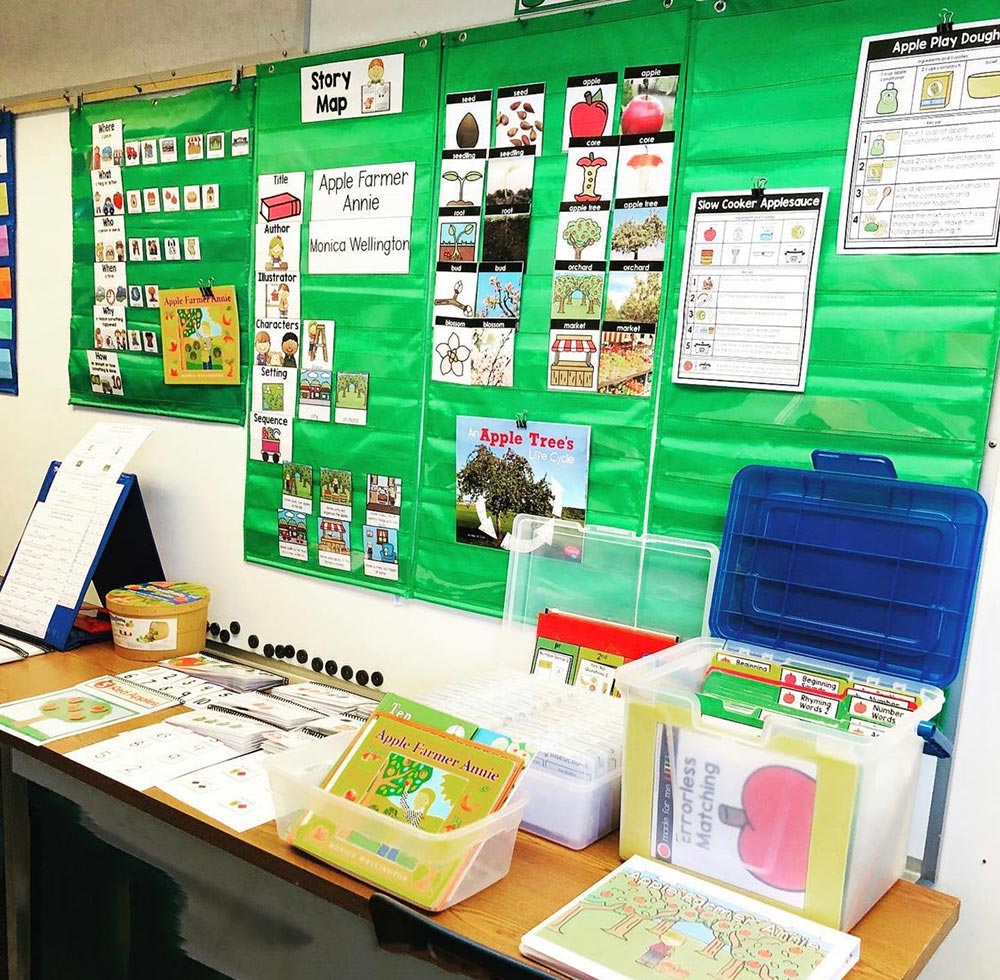
That’s the idea behind the Made For Me Literacy Apples unit. Children have repeated opportunities to encounter and use apple vocabulary through read-alouds, vocabulary activities, science, crafts, sensory recipes, task boxes, math, and everyday opportunities to communicate.
You don’t need to use every activity with every child. Choose the experiences that fit your learners, revisit important words in different ways, and give children plenty of reasons to use them.
Explore the Made For Me Literacy Apples unit to see how these activities work together across the month.
Because the real goal was never to teach a list of apple words.
It was to give children language they can use long after the apples are gone.
Leave a Reply