
One favorite picture book can do much more than fill a spot in your read-aloud schedule. With thoughtful planning, one story can become the starting point for vocabulary, comprehension, writing, literacy skills, math concepts, art, and independent practice throughout the week.
This approach can be especially helpful with early learners who benefit from repetition and predictable routines. Instead of introducing a completely new context with every lesson, you can use a story students already recognize to help them approach new skills.
The goal isn’t to find five different ways to reread the same book. It’s to give children different ways to interact with the ideas inside it. If planning separate activities for every part of the week sometimes feels scattered, a familiar story can give everything a shared starting point.
Start by Looking at What the Book Gives You
Before planning activities, take a closer look at the book itself.
Who are the characters? What happens in the story? Which words or concepts come up naturally? Does the book introduce colors, numbers, emotions, actions, descriptive words, or other ideas that connect with skills your students are already learning?
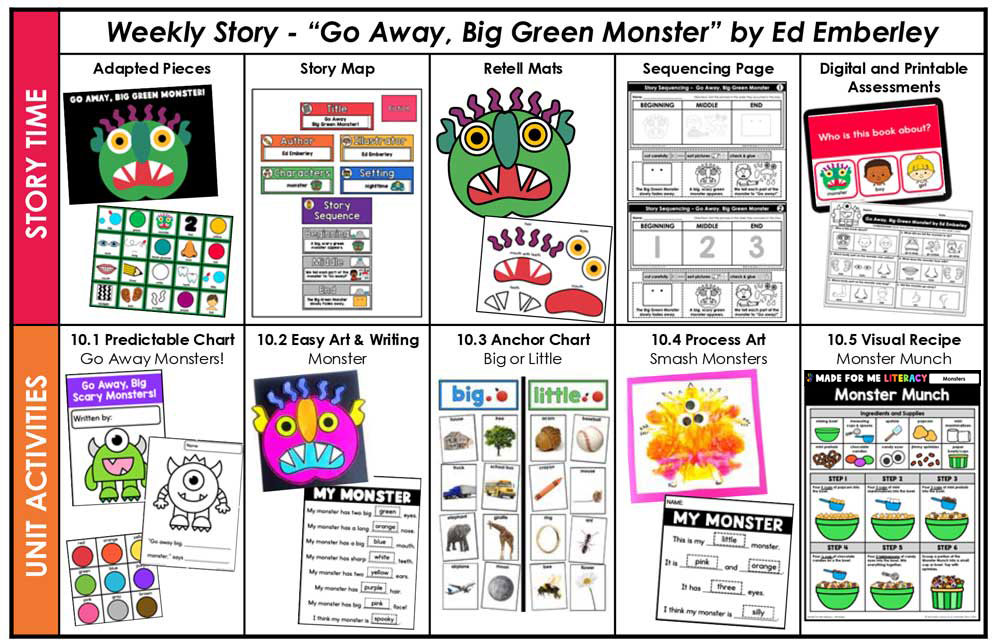
Go Away, Big Green Monster! by Ed Emberley is a good example. Beyond the monster theme, the book gives children opportunities to talk about descriptive concepts such as big and little, long and short, and other characteristics they can notice and compare.
Those ideas can follow students into other parts of the school day.
The same is true for almost any well-chosen picture book. You don’t need to build an activity around every page. Look for a few strong ideas that are worth revisiting.

Give Children Different Ways to Show What They Know
Not every child will demonstrate comprehension by answering questions after a read aloud.
One student may be able to retell the story independently. Another may sequence pictures. A student who needs more support might match adapted story pieces to a picture or use visual pieces on a retelling mat.
They are all working with the same familiar story, but the way they participate is different.
This is one reason a picture book makes such a useful anchor for differentiated instruction. You can change the level of support without constantly changing the content.
The child who needs more visual support still gets to participate in the same classroom experience as the child who is ready for more independent work.
Let Vocabulary Travel Through the Week
Vocabulary becomes much more useful when children encounter words in different situations.
If the week’s words include big and little, students might first hear them during the story. Later, they can see the words and pictures on an anchor chart, compare objects by size, and use the words while talking about something they have created.
Words such as straight, squiggly, short, and long can work the same way. Children can notice them in pictures, use them during art, find examples around the classroom, or practice them during a center.
The words stay familiar while the experience changes.
You don’t need an elaborate activity for every vocabulary word. Choose a few words your students can actually use, then bring them back naturally throughout the week.
Connect the Story to Skills You’re Already Teaching
A book-based week works best when you start with your instructional goals rather than the theme.
If your students are working on beginning sounds, syllables, opposites, or early math concepts, ask whether the story provides a natural context for practicing those skills.
During a monster-themed week, for example, students might count syllables in familiar monster vocabulary or practice beginning sounds using pictures they already recognize. They could work with opposites or an early math concept in another center.
The monster isn’t the learning objective. It simply gives children a familiar context for practicing the skill.
And not every subject needs to connect to the book. If a connection feels forced, skip it. The purpose is to make learning more cohesive, not to turn every lesson into a themed activity.
Move From the Page to Hands-On Learning
Some of the best extensions happen when children can make, move, sort, cook, or create.
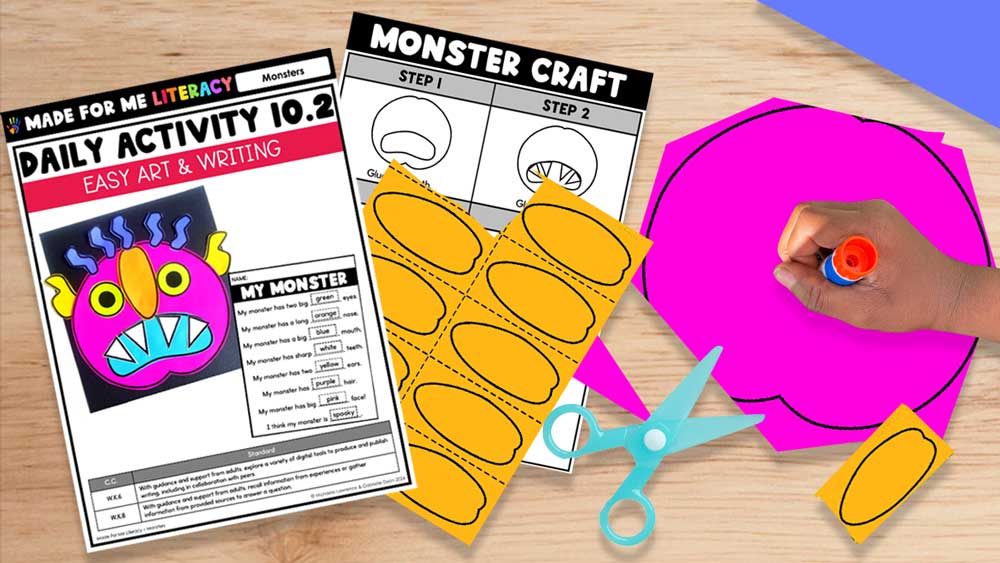
After talking about monsters and descriptive words, students might create their own monster. Suddenly those vocabulary words have a practical purpose. Is the monster big or little? Does it have long hair or short hair?
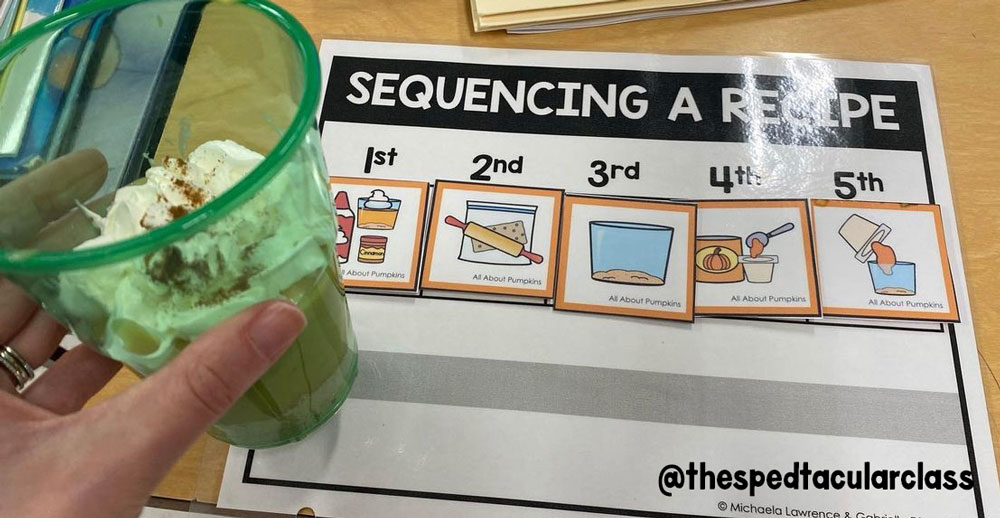
A visual recipe offers a completely different experience. Students can follow a sequence of pictured steps, participate in making something together, and practice independence within a familiar theme.
These activities may look very different from story time, but the connection to familiar ideas gives children another opportunity to use what they have been learning.
Differentiate the Support, Not the Whole Lesson
Differentiation doesn’t always mean preparing an entirely different activity for every child.
Often, the concept can stay the same while the level of support changes.
A student practicing beginning sounds might choose from several possible answers. Another might work with fewer choices or stronger visual cues. A student who isn’t ready to complete that skill independently might work on an errorless task that builds matching, attention, and independent-work routines.
You can use the same idea with comprehension questions, centers, digital activities, writing, and independent practice.
This also makes planning more manageable. Instead of creating separate lessons for every learner, you begin with a shared experience and decide where individual students need more or less support.
Try It With Your Next Read Aloud
Choose a picture book your students already enjoy and make a quick list of what you find inside it: useful vocabulary, story elements, concepts, and connections to skills you’re already teaching.
Then plan across the week instead of treating each day as a separate event.
You might begin with the story and its vocabulary, revisit those ideas through shared writing or an anchor chart, practice related skills during centers, and add a hands-on experience later in the week.
You don’t need to use every idea you find.
A few strong connections are more useful than a week packed with activities that happen to share the same theme.
Familiar Stories Can Open the Door to New Learning
When children return to a familiar book, they aren’t necessarily doing the same thing again. They may be approaching something new from a place where they already feel comfortable.
They recognize the pictures and language. They begin to anticipate what happens next. That familiarity gives you room to introduce a new skill, increase independence, or adjust the level of support.
The Made For Me Literacy: Monsters unit is one example of this approach. It uses Go Away, Big Green Monster! as the starting point for adapted story materials, vocabulary, differentiated skill practice, centers, writing, art, and hands-on experiences throughout the week.
For teachers who would rather begin with those differentiated materials already planned, explore the Made For Me Literacy: Monsters unit and see how one picture book can grow into a full week of learning.
Leave a Reply